Your whole restaurant, within reach.
lowboy puts yesterday's numbers, this week's forecast, the count, the order and the day's lists in one app your managers will open. When something is off, it becomes a job that someone finishes.
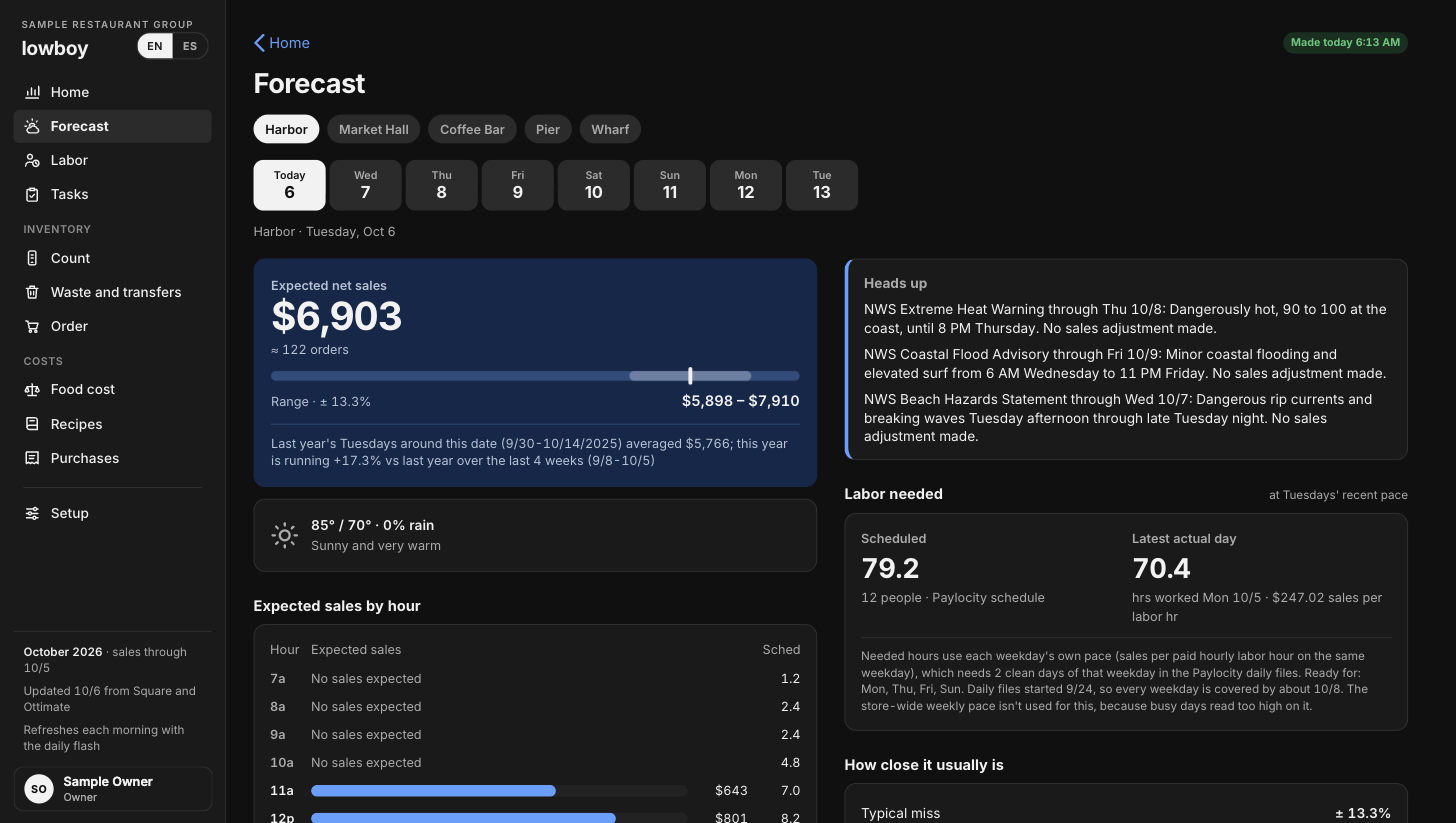
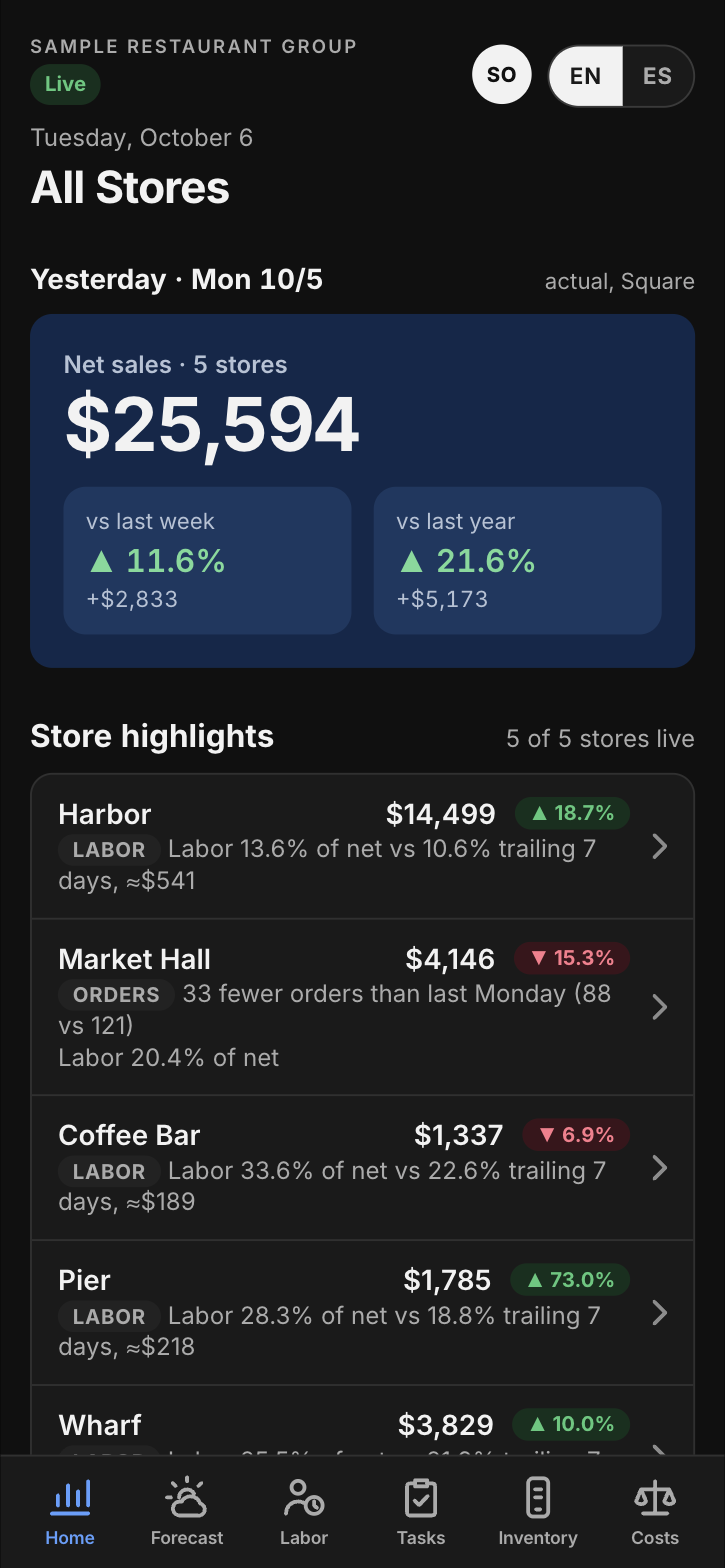
Five logins. None of them open at 7 a.m.
Sales live in the register. Hours live in payroll. Prices live in the invoice tool. Counts live in inventory software nobody likes opening. The person running the shift needs a little of each, and no single screen has it.
One screen before the doors open.
Yesterday's sales, labor and prime cost for every store, with today's forecast sitting next to them.
Every flag ends in a job.
A price jump, an over-scheduled hour or a missed list turns into a task with an owner, a due date and proof it got done.
Built for the floor.
Plain kitchen language, in English and Spanish, on the phone in a manager's pocket or the tablet on the line.
Other tools tell the owner what's wrong. lowboy is where the team fixes it.
An alert nobody acts on is just a number.
Every flag in lowboy carries one button: Make it a task. Two taps and it sits on that store's screen until someone does it.
"Rep is matching it. Fixed starting Thursday's delivery."
No texts and no pings after hours. A task waits on the store's screen for whoever is on the clock.
Four jobs. One app.
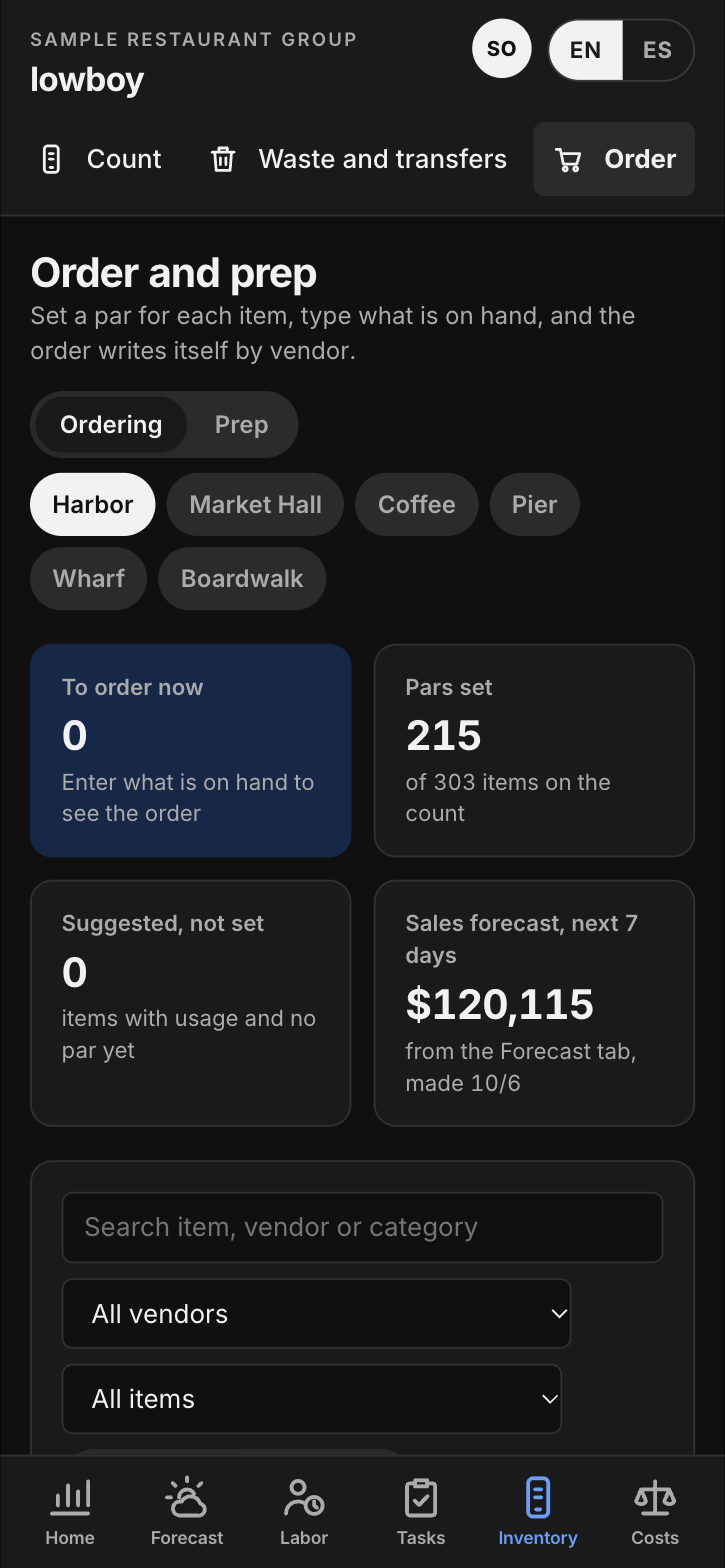
Tomorrow's sales, before tonight's close.
Each morning lowboy forecasts the next seven days for every store, hour by hour, from your own sales history and the weather on the way. Then it puts that number to work.
Staff it
Hours the day needs against hours on the schedule, before the shift starts.
Prep it
How much of each batch to make, after what's already on hand.
Order it
An order for each vendor, sized to last until the next delivery.
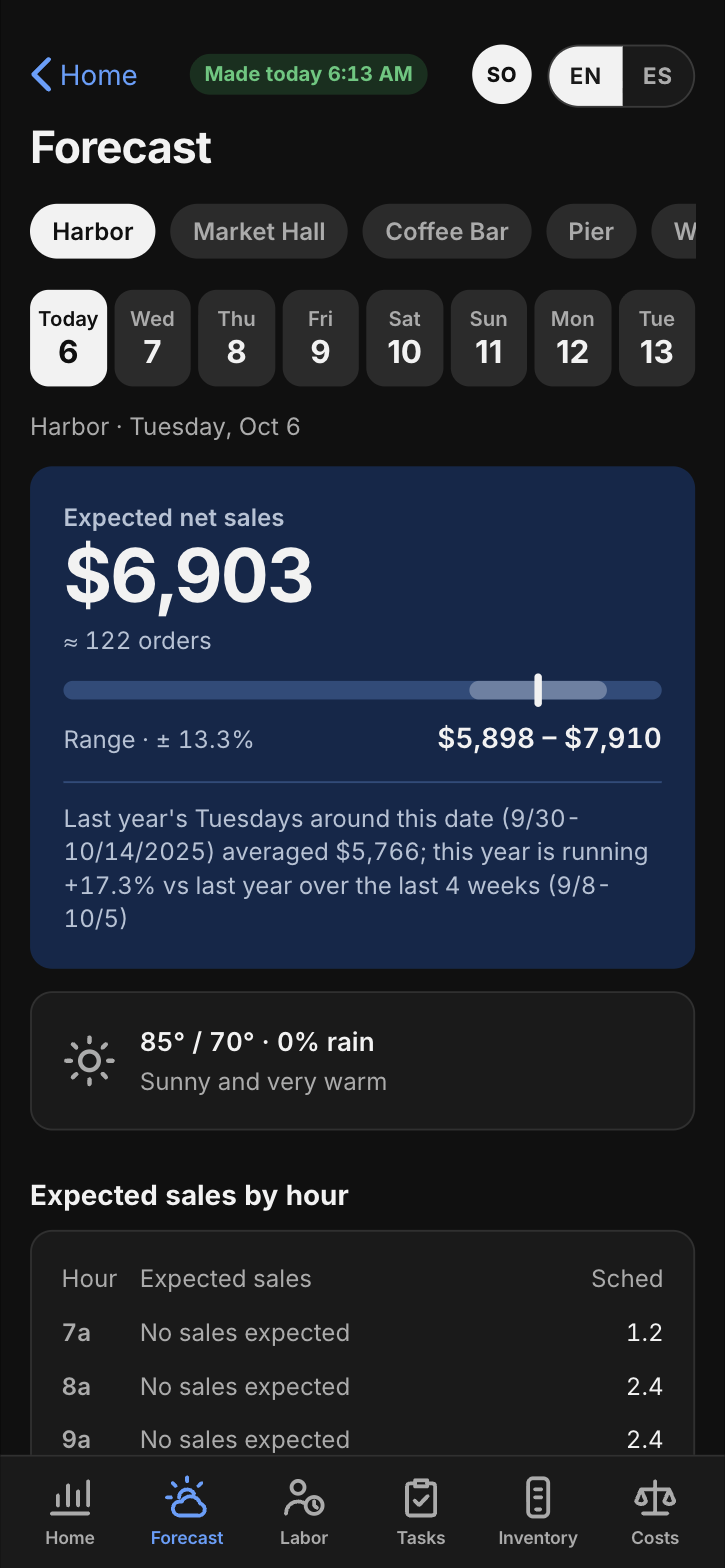
Every forecast is scored against actual sales the next morning. Its typical miss sits right on the screen.
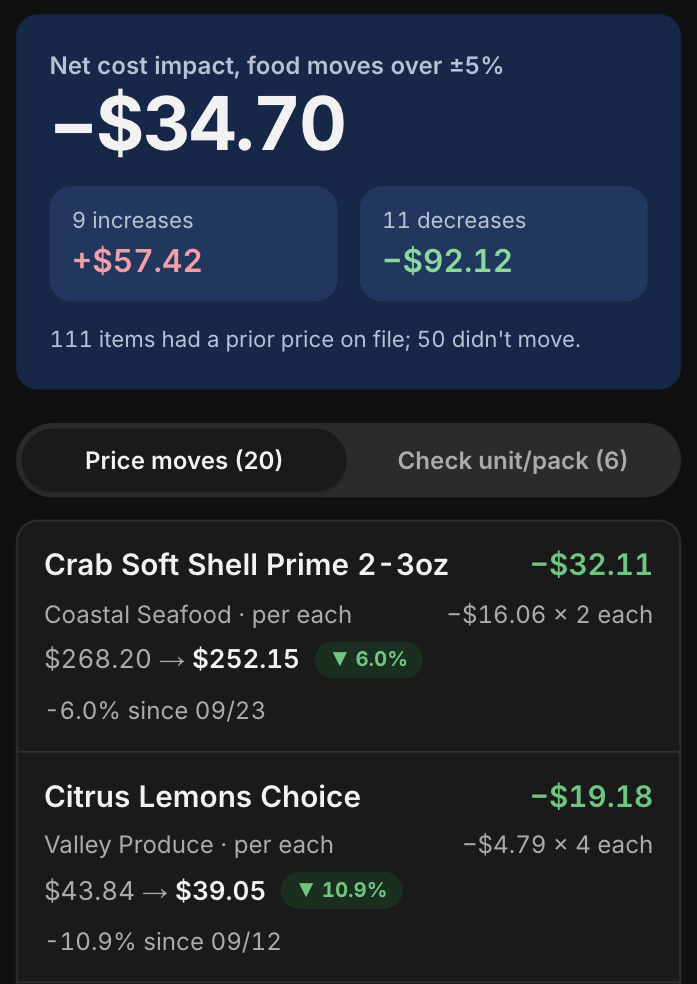
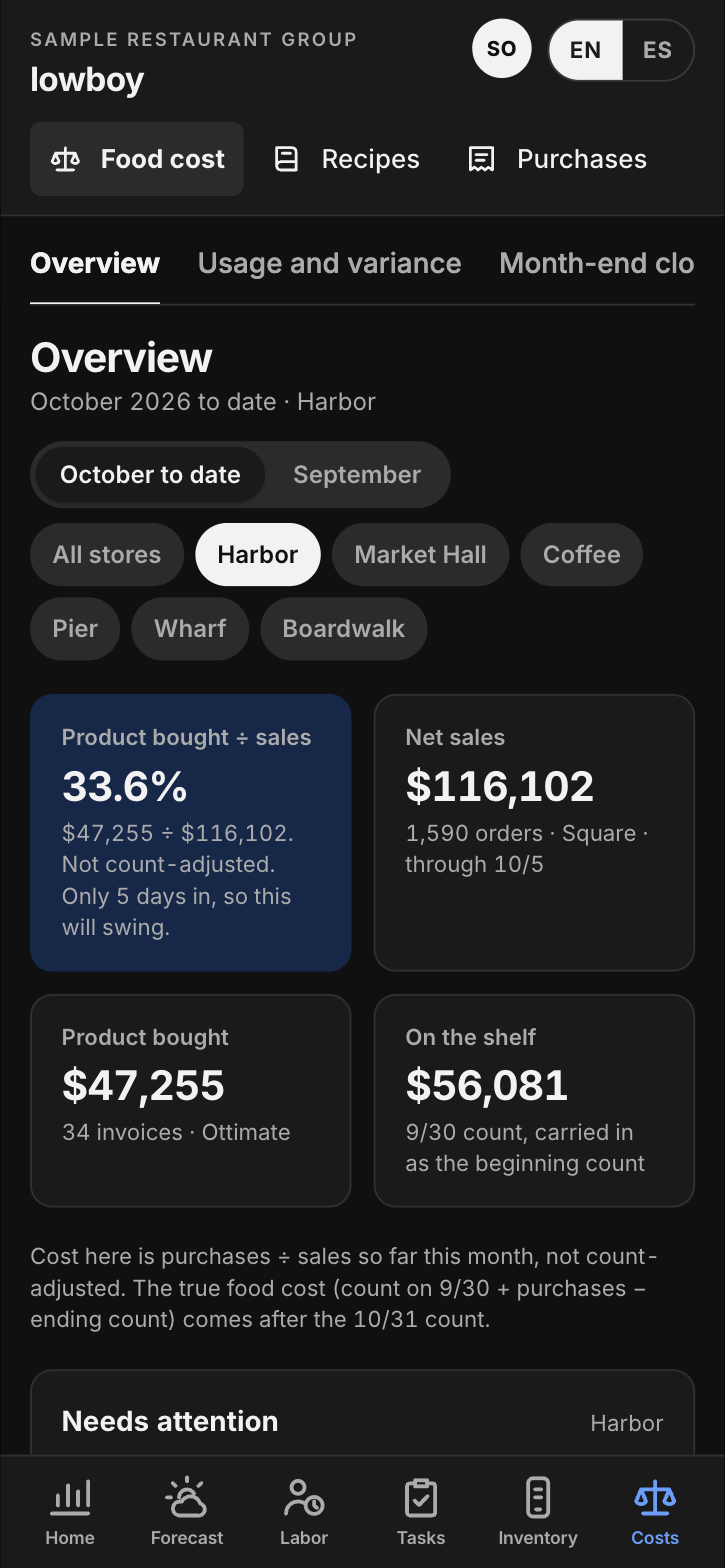
Money a busy operator never sees.
While we were building lowboy, a line-by-line check of one vendor's invoices against the prices we had signed turned up months of overbilling. The vendor agreed to credit it back. Nobody on the team would have caught it by hand.
Price watch
Every food price move over 5%, with what it costs that store each week.
Agreed-price check
Set the price you shook on. Any invoice line billed above it gets flagged.
Money recovered
A credit request drafted for you, tracked until it is paid, and a running total for every store.
Software your managers will open.
English y español
Every screen switches language with one tap.
A view for every role
Owners see every store. Managers see their own. The team sees its lists, never sales, labor or cash.
Installs from a link
Personal phones or a shared tablet on the line. No app store, no hardware to buy.
Quiet off the clock
Nothing is sent to anyone who isn't working. The work waits at the store.
Built inside Broad Street Oyster Co.
lowboy started as the app one multi-location seafood group built for itself, because its managers would not open the software it was paying for. It runs on that group's real numbers today.
Read the storySee your own stores in lowboy.
Thirty minutes with the operator who built it. Made for restaurant groups with 3 to 20 locations.
Priced per location, below the inventory software it replaces.